A new book by Levermore Global Scholars Research Fellow Jonathan Cristol, Ph.D., addresses how the United States ended up in Afghanistan, why we're still there, and how there are no easy answers in international politics.
A new book by Levermore Global Scholars Research Fellow Jonathan Cristol, Ph.D., addresses how the United States ended up in Afghanistan, why we’re still there, and how there are no easy answers in international politics.
International politics is rarely a simple subject, especially when military actions are involved. Patriotic passions can become inflamed and cool heads rarely prevail. This may not have been clearer at any time in our lifetimes, at least in the United States, than with the听attacks in New York City and Washington,听D.C.,听on September 11, 2001.
Even 17 years later, unpacking personal and governmental responses to the aggression and violence of that day is anything but straightforward. And, according to听, research fellow in the听听(LGS) program, that’s the first thing to remember in trying to think about that day and its aftermath.
鈥淓verything is always more complicated than it seems,” said Dr. Cristol. 鈥淭hat’s the biggest lesson. People should realize that there are not great military solutions to terrorism problems.”
Dr. Cristol came to 糖心破解版 at the invitation of Levermore Global Scholars Administrative Director Peter DeBartolo. Here, Dr. Cristol teaches courses on issues pertaining to international peace and security, including this year’s First-Year Seminar on听Weapons of Mass Destruction,听and researches and writes about international security, Middle East politics, the Korean Peninsula, and United 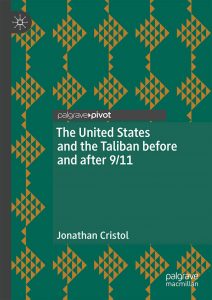 States foreign policy in the Middle East and East Asia.
His latest work is听听(Palgrave, 2018), which he finished with the help of an LGS research assistant.
Dr. Cristol’s essays have appeared in such outlets as听听补苍诲听, and, despite the complexity of the issues he writes about, he said he always tries to make the subjects approachable.
鈥淚t’s on an academic press, but in general, I write for a mass audience,” he said. 鈥淚 had to walk that line for something that’s peer-review passable with sources but that people would want to read.”
The main question the book addresses, he said, is how we ended up in Afghanistan and why we’re still there.
鈥淲e didn’t really ask that question [in 2001] because the answer seemed obvious,” he said. 鈥淚t seemed to me, and I think it seemed to most Americans and most of the world at the time, that that was the right thing to do. It became more and more clear that we had other options.
鈥淲hat we should have done is say, ‘We are coming into your country and we are going after Al Qaeda. We’re not trying to overturn your government, but if you get in our way, we’ll topple you.'”
As a result of the American military response, the Taliban splintered, with some members leaving its fold or even leaving the country, while those who remained were radicalized, resulting in prolonged military action in the country.
鈥淭he Taliban right now occupies more territory than they did in 2002 and, at the end of 2017, we still had 15,000 troops there,” he said. 鈥淯sing the military as a law enforcement tool or as an occupying army is almost always a mistake.”
Tragic as the last 17 years in the Middle East have proven to be, history should be a learning opportunity, Dr. Cristol said.
鈥淚f there’s one takeaway for all international studies students, it’s that international politics is complicated,” he said. 鈥淭here are no easy answers. There are second- and third-order effects of almost everything we do and it’s all interconnected. What we do in one place affects our reputation globally.”
For further information, please contact:
Todd Wilson
Strategic Communications Director听
p 鈥� 516.237.8634
e 鈥� twilson@adelphi.edu