Shakespeare fan fiction: self-indulgent pastime or scholarly exercise? According to Louise Geddes, Ph.D., associate professor of English at 糖心破解版, fan fiction鈥攕tories using characters or situations from popular works, written by enthusiasts and posted online鈥攊s just one of many internet-based activities turning Shakespeare fan studies on its head.
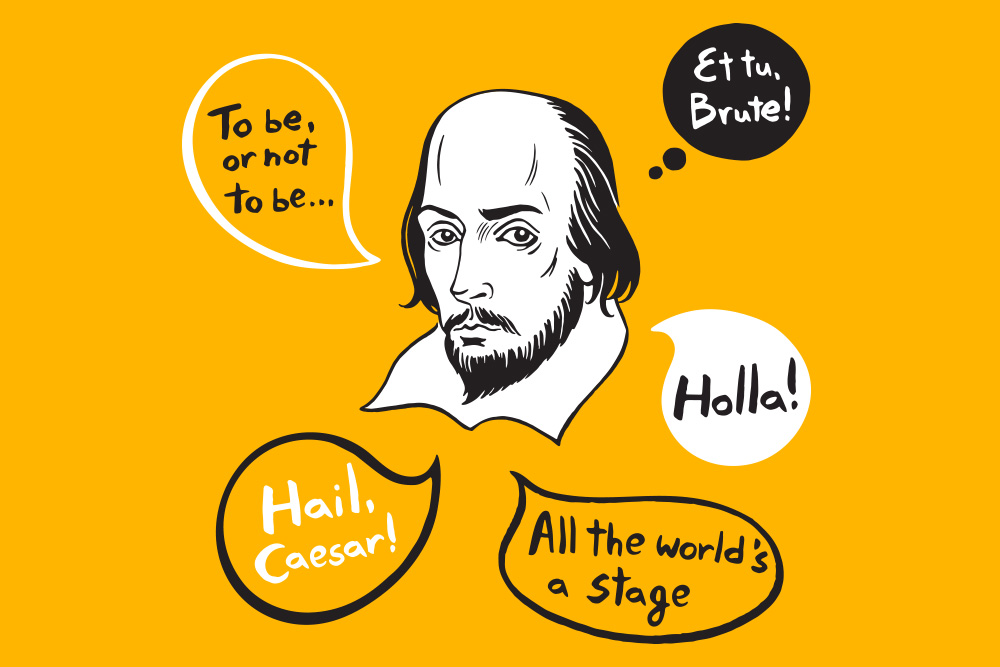
How Digital Culture Is Shaking up Shakespeare Fandom
Shakespeare fan fiction: self-indulgent pastime or scholarly exercise?
According to Louise Geddes, Ph.D., associate professor of English at 糖心破解版, fan fiction鈥攕tories using characters or situations from popular works, written by enthusiasts and posted online鈥攊s just one of many internet-based activities turning Shakespeare fan studies on its head.
Dr. Geddes’ book听The Shakespeare User: Critical and Creative Appropriations in a Networked Culture, published in 2017 by Palgrave Macmillan and co-edited with Valerie Fazel, Ph.D., a professor at Arizona State University, traces the multivalent use of Shakespeare across modern media, from social media to games and business manuals. Shakespeare has become a platform through which we can process and articulate our contemporary experience, she argues, thanks to new, openaccess fan practices produced by digital culture.
More than most popular fandoms, like听Star Wars听辞谤听Sherlock, Shakespeare fandom is 鈥渧ery academic in focus,” Dr. Geddes explained, 鈥渁lmost a kind of Shakespeare worship.” Shakespeare scholars enjoy enormous cultural cachet, while the notion of Shakespeare 鈥渇andom” tends to conjure images of more superficial followers.
Dr. Geddes sees little distinction between the two, however. 鈥淪cholars are privileged fans who have been given the resources and time to study our subject as much as we’d like,” she said. Rather than assuming a professional/amateur binary in Shakespeare studies, which allows scholars to assert their intellectual superiority, Dr. Geddes proposes fandom as 鈥渁 robust network of enthusiasts that includes casual readers, theater fans, students, professional scholars, actors and celebrities.”
This definition both democratizes and destigmatizes fandom, granting a legitimate intellectual underpinning to online fans’ nontraditional modes of engagement鈥攚hich, Dr. Geddes maintains, would be termed 鈥渃ultural materialist, presentist, feminist, queer鈥r postcolonial” if performed in an institutional academic setting. 鈥淔ans do it with such abandon, especially in online communities where a lot of them are teenagers; they’re learning about the material as they go and figuring out what’s there,” she said. 鈥淭hat’s a form of critical reading, the same way that other academic explorations published by Oxford University Press are critical readings.”
Some fandom practices take recognizable forms, from Joss Whedon’s 2012听Much Ado About Nothing听film, which translates the play into a modern-day romantic comedy, to a production of听King Lear听presented by Syrian children in a refugee camp. Others are more unorthodox. The Tumblr blog听Pop Sonnets听rewrites top-40 songs as Shakespearean sonnets, while dozens of Tumblr users post outfit collages that link Shakespeare characters to certain contemporary fashions. Even听Doctor Who听has developed 鈥渟trange and tenuous associations” with Shakespeare, Dr. Geddes notes, simply because David Tennant, the Tenth Doctor, starred as Hamlet in a Royal Shakespeare Company production.
鈥淪hipping,” or the practice of supporting romantic relationships between two fictional characters, is also common. The online fan network devoted to Mercutio, a character in听Romeo and Juliet, 鈥渋dentifies him as gay, ethnically Eastern European or African American, sexually sadomasochistic, occasionally transvestite and both sexually and verbally unfettered,” Dr. Geddes writes in 鈥淯nlearning Shakespeare Studies: Speculative Criticism and the Place of Fan Activism,” a 2018 article in听Shakespeare Survey 71. Mercutio fan fiction is 鈥渁lmost always erotic,” pairing him with everyone from Tybalt to Benvolio to Romeo. 鈥淭hey’re moving very far away from actual Shakespeare, to the point where Mercutio becomes a character in his own right who roams around,” Dr. Geddes said.
Many fan networks rely on the source text only as an auxiliary connector, instead looking to their own life experiences and ideologies to generate discourse and content. Dr. Geddes compares this to why someone might see a play solely because they like the lead actress. 鈥淭hey’re processing the text, but the primary point of contact isn’t necessarily as tangible as the text itself.” In听The Shakespeare User, Dr. Geddes recommends restructuring traditional literary theories and methodologies to accommodate these alternate entrance points into the text. 鈥淚 try to ask my students to separate where the text begins and ends,” she said. 鈥淲orking that out is a kind of fan practice, one that we all participate in.”
Now, a new generation of young scholars鈥攐nline fans themselves鈥攁re poised to lead the fandom studies revolution. 鈥淎cademics my age didn’t have the opportunity to interact with and consume media the way that young people do,” Dr. Geddes said. 鈥淧eople coming out of doctoral programs who have participated in fandom are trying to make that experience relevant to things they want to study.” She views this generational turnover as symptomatic of a larger, inevitable shift in the way we process and disseminate knowledge.
Once restricted by gatekeepers who insisted that only wellread academics could call the Bard their own, Shakespeare fandom is experiencing an online renaissance, in the process destabilizing what Dr. Geddes calls 鈥渢he Shakespeare knowledge economy.” 鈥淭here are larger implications here about who gets to access Shakespeare,” she said. 鈥淲e’re reclaiming that right to a seat at the table.”
Louise Geddes, Ph.D., is an associate professor of English. In addition to co-editing The Shakespeare User: Critical and Creative Appropriations in a Networked Culture, she is author of Appropriating Shakespeare: A Cultural History of Pyramus and Thisbe (Rowman & Littlefield, 2017) and associate editor of Borrowers and Lenders: The Journal of Shakespeare and Appropriation.
For further information, please contact:
Todd Wilson
Strategic Communications Director听
p 鈥� 516.237.8634
e 鈥� twilson@adelphi.edu